Boulder Retaining Wall Contractor – Salt Lake City & West Valley City
Boulder retaining walls are one of the things we’re known for. If you’ve got a sloped backyard, a failing old wall, or you’re trying to carve usable space out of a hillside, large natural stone is often the best solution. Along the Wasatch Front, we’ve built everything from smaller garden bed walls to large, tiered backyard boulder retaining walls that completely reshape a property.
We install boulder walls throughout Salt Lake City, West Valley City, West Jordan, South Jordan, Draper, and surrounding communities across Salt Lake County.
Why Homeowners Choose Boulder Walls
A properly built boulder wall doesn’t look manufactured. It blends into the landscape and fits Utah’s natural terrain.
Our clients typically come to us for:
-
- Sloped backyards that need leveling
- Erosion problems
- Replacing a failed block or timber wall
- Creating terraced yards
- Integrating steps into a grade change
- Supporting patios or outdoor living spaces
Boulder walls are especially popular for backyard projects where homeowners want something structural but natural looking.
Boulder Walls We've Built
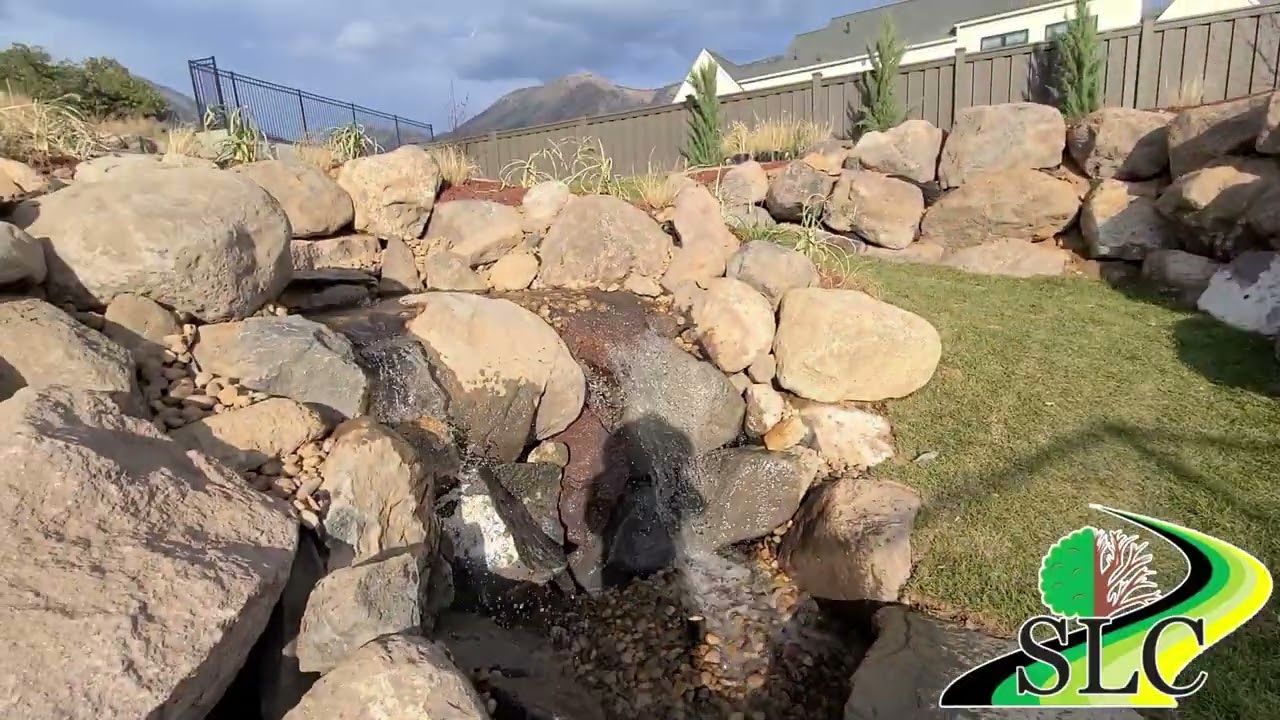

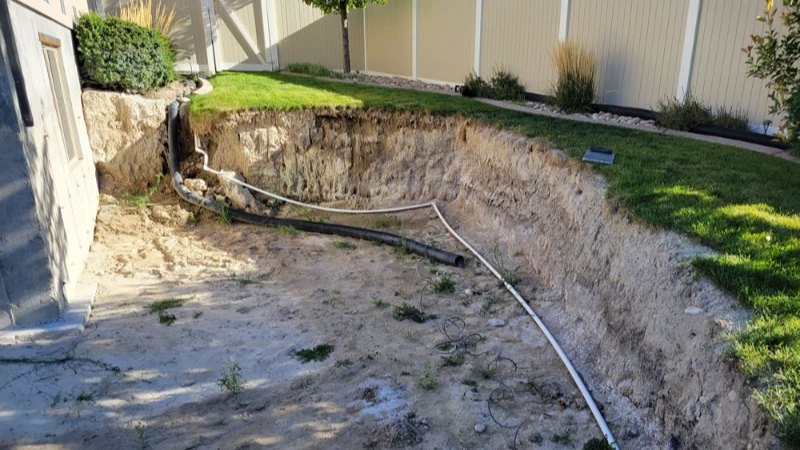
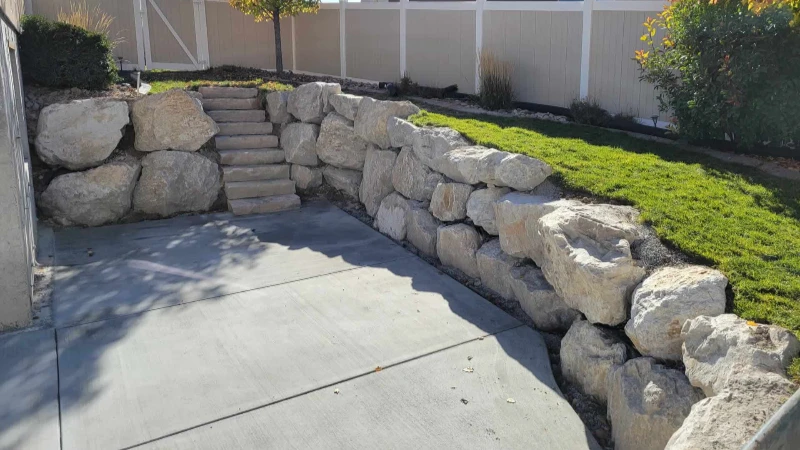
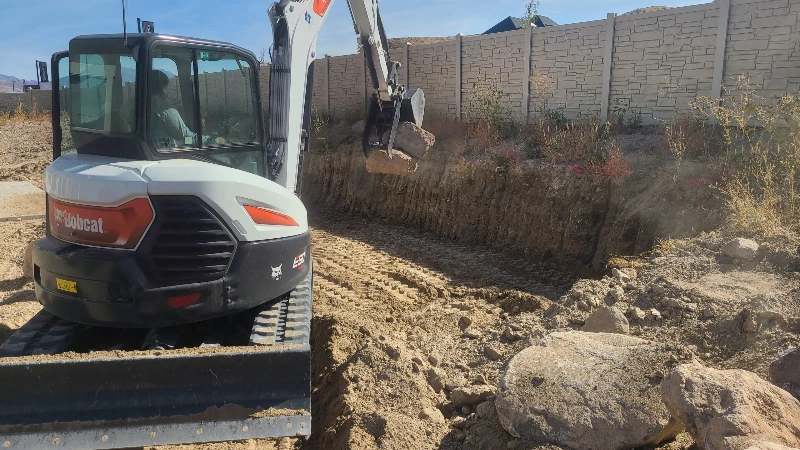
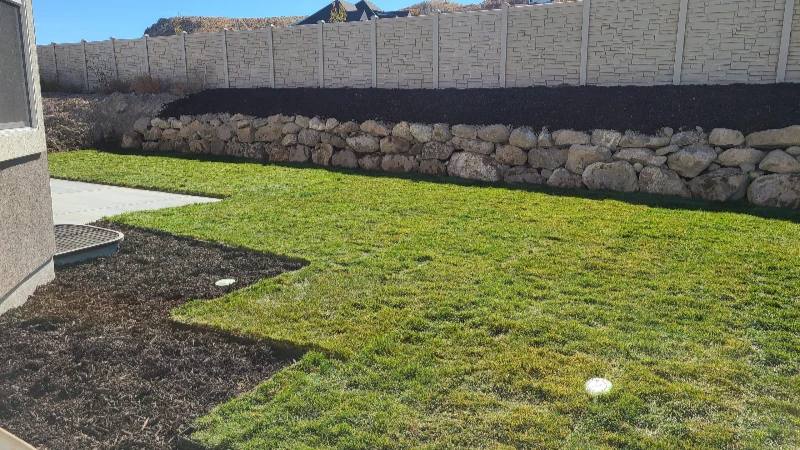
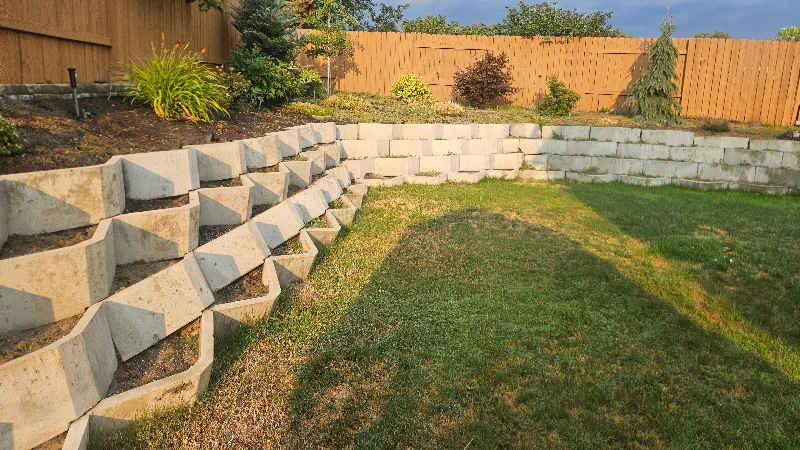
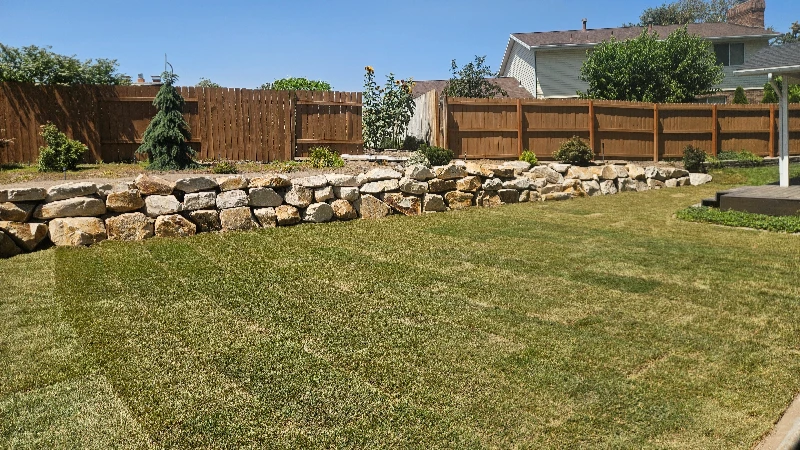
Backyard Boulder Walls With Steps & Features
Many of the walls we build aren’t just straight runs of stone. We regularly integrate:
-
- Natural stone or block steps built directly into the wall
- Tiered walls to create usable lawn or patio space
- Seating areas along the top of the wall
- Water features or drainage solutions built into the grade
Because we also build patios, xeriscapes, and water features, we design the boulder wall as part of the overall layout, not as a separate add-on.
Proper Excavation & Base Preparation for Boulder Retaining Walls
In our experience, the long-term stability of a boulder retaining wall comes down to the base work before any stones are set. Because boulder walls rely on weight and placement rather than interlocking systems, the foundation has to be solid and properly prepared.
Utah’s clay-heavy soils can shift with moisture and seasonal changes, so we focus on building a stable base and planning for drainage from the start.
Our process includes:
-
- Excavating to the proper depth for the wall height
- Removing loose or unstable soil
- Installing a compacted base to support the weight of the boulders
- Planning for drainage behind the wall to prevent pressure buildup
- Positioning boulders for stability, not just appearance
When a boulder wall exceeds 4 feet in height, engineering and permits are typically required. We handle that process when needed to ensure the wall is built safely and correctly.


Boulder Sourcing, Sizes & Placement
We work with local quarries and landscape suppliers to source natural stone that fits both the structure and look of your project. Most boulder retaining walls in our area are built using local stone that naturally blends in with our natural surroundings.
Common boulders we use include:
-
- Quartzite boulders, one of the most common stones used along the Wasatch Front
- Sandstone boulders for a warmer, more natural color range
- Granite or mixed mountain stone for larger structural walls
Depending on the project, stones can range from a few hundred pounds to several thousand pounds each. We have the equipment needed to transport and place these stones safely and precisely.
Access is always part of the planning. Tight backyards, slopes, and existing landscaping can affect how we stage and build the wall, so we evaluate that upfront. Boulder placement is done intentionally so the stones lock together and provide long-term structural stability.
Rebuilding a Failing Boulder Wall
We’re often called to look at boulder walls that are leaning, settling, or starting to separate. In our experience, most problems trace back to poor base preparation or a lack of drainage behind the wall.
Common signs of failure include:
-
- Stones shifting or rolling forward
- Gaps opening between boulders
- Soil washing out from behind the wall
- Bulging sections or uneven settling
- Water pooling at the base or seeping through
When we evaluate your wall, we look at the base, soil conditions, drainage, and overall structure. In some cases, a section of the wall can be reset and reinforced. In other situations, especially if the foundation has failed, rebuilding the wall correctly is the safer and more cost-effective long-term solution.
Our goal is to fix the root problem so the wall performs the way it should for years to come.

Serving the Salt Lake City Metro Area
We build boulder retaining walls throughout:
- Salt Lake City
- West Valley City
- West Jordan
- South Jordan
- Murray
- Draper
- Midvale
- Taylorsville
And surrounding areas across Salt Lake County
How Much Do Boulder Walls Cost To Build?

Small Boulder Wall
$3,500 - $9,000

Medium Boulder Wall
$9,000 - $25,000

Large Boulder Wall
$25,500 - $65,000+
Questions About Boulder Walls?
If you have questions about boulder retaining walls in Salt Lake City we have likely answered them here.
Schedule a Consultation
If you’re considering a backyard boulder retaining wall or need to replace an existing wall, give us a call at (801) 637-8931 or request an estimate online.
We’ll walk your property, talk through options, and design a wall that fits your slope, access, and overall landscape plans.