Here’s What Xeriscaping In Salt Lake County Really Involves
For a lot of homeowners in Salt Lake County, the question is not whether grass looks nice. It is whether it still makes sense. Between water bills, drought conversations, and the time it takes to keep turf green, more people are looking at their yard and wondering if there is a better way to use the space.
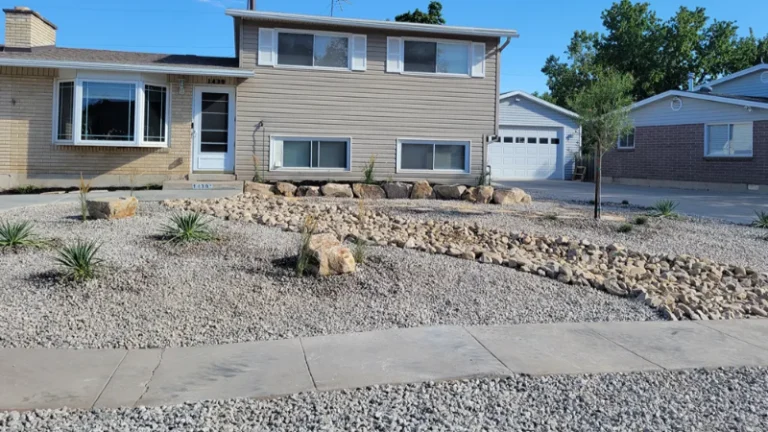
The state’s Flip the Strip initiative has pushed that conversation forward. The focus is simple: reduce unnecessary lawn, especially in narrow park strips and unused areas, and replace it with landscapes that use water more responsibly. But there is a big difference between qualifying for a rebate and building a yard that actually looks good and performs well long term.
At SLC Lawn Services, we handle lawn-to-xeriscape conversions across Salt Lake County every season. If you are seriously considering replacing your lawn, here is what that process really involves.
What a professional turf removal project actually includes
Let’s start with this: replacing turf is construction. It is not spreading rock over dead grass. It is not laying landscape fabric and calling it finished. When we remove a lawn, we are rebuilding that portion of the property.
A properly managed turf removal project typically includes:
-
- On-site walkthrough – We look at slope, drainage, sun exposure, irrigation layout, and how you use the yard.
- Clear layout plan – Bed lines, plant groupings, and transitions to concrete or driveway are mapped out before demolition begins.
- Complete sod removal – Grass is cut out and hauled off so roots do not come back through planting areas.
- Grade correction – We adjust elevations so water flows away from the home, not toward it.
- Irrigation retrofit – Spray zones are removed or converted to drip.
When this part is rushed, you see it later. Grass reappears. Mulch washes into the sidewalk. Plants struggle because irrigation was never redesigned. The prep work is not flashy, but it is what makes the finished product last.
Soil prep and grading realities in Utah
Utah soil can be tough to work with. In some neighborhoods it is heavy clay that holds water longer than it should. In others it is compacted construction fill with very little organic matter. Turf hides those problems. Once you remove it, you see what you are really dealing with.
Before any plants go in the ground, we focus on the base layer:
-
- Lowering finished grade so mulch and rock sit below hard surfaces, not above them.
- Breaking up compacted soil so roots can actually grow.
- Blending in compost where needed to improve structure and drainage.
- Correcting slope to eliminate standing water.
We also avoid blanketing every bed with landscape fabric. Over time it traps debris, restricts soil movement, and can create drainage headaches. Proper grading and the right mulch depth do a better job controlling weeds while still letting the soil breathe.
Getting the soil and slope right at the beginning saves years of frustration.
Irrigation conversion from spray to drip
Most lawns in Salt Lake County are watered with overhead spray heads. That works for turf. It does not work well for shrubs, grasses, and perennials.
If you leave spray irrigation in place after removing grass, you end up watering sidewalks and overwatering plants. That defeats the purpose of xeriscaping.
A professional irrigation conversion includes:
-
- Removing or capping spray heads in planting areas.
- Installing pressure regulation and filtration for drip lines.
- Separating zones based on plant water needs.
- Running inline drip tubing under mulch for even coverage.
- Using individual emitters for trees and larger shrubs.
Hydrozoning is critical. Plants with similar water requirements share the same schedule. That way you are not drowning low-water plants just because one section needs more moisture.
In this climate, it is not just about using less water. It is about putting it exactly where it belongs.
Timeline expectations for a lawn-to-xeriscape conversion
Replacing a lawn is not a weekend project. Even a modest front yard conversion takes coordination.
-
- Consultation and design: usually 2 to 4 weeks.
- Turf removal and grading: 1 to 2 weeks depending on size.
- Irrigation retrofit: about 1 week.
- Planting and finishing work: roughly 1 week.
If you are applying for a rebate through a program like Flip the Strip, there may be additional review or documentation steps. We walk clients through that process so nothing is missed.
It is also important to understand that a new xeriscape grows into itself. The first season is about establishment. Plants may look spaced out at installation, but they are set according to their mature size. Within a couple of growing seasons, the structure fills in and the design really starts to show.
What separates a clean, finished xeriscape from a “rock yard”
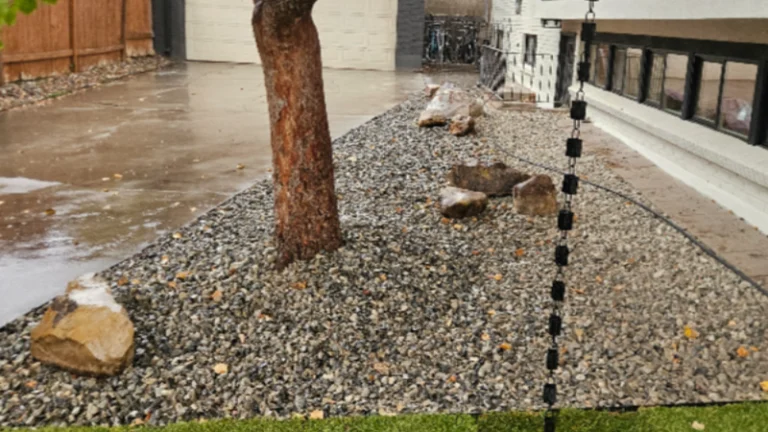
One of the biggest fears we hear is ending up with a yard that feels bare or harsh. That usually happens when too much emphasis is placed on rock and not enough on plant structure.
A well-built xeriscape should include:
-
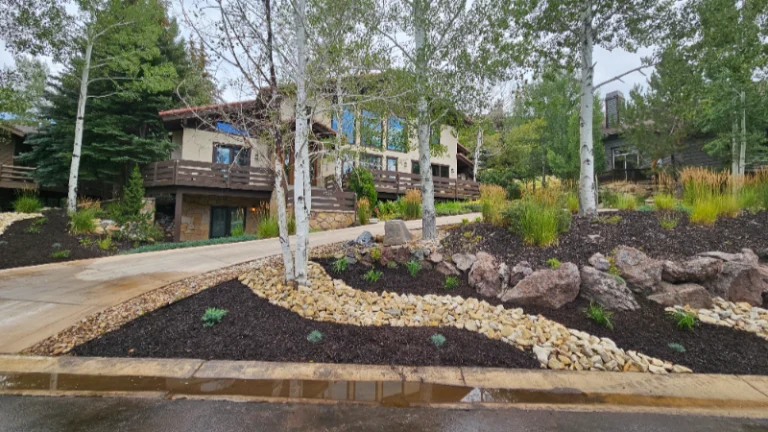
- Layered planting – Trees for height, shrubs for backbone, ornamental grasses for movement, and perennials for color.
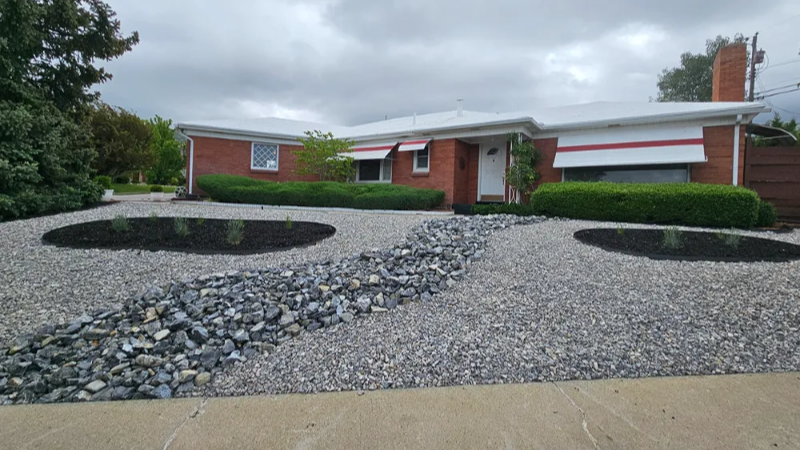
- Defined bed edges – Clean transitions between planting areas and hard surfaces.
- Balanced mulch use – Enough to protect soil and reduce weeds, not so much that the yard feels sterile.
- Water-wise plant selection – Species that handle Utah heat, cold winters, and limited irrigation.
Utah’s water-wise plant lists include options like Russian Sage, Blue Oat Grass, Penstemon varieties, Desert Globemallow, and Sulfur Buckwheat. Used correctly, these plants bring texture and seasonal color. A rock yard offers none of that.
If your project also includes structural elements such as a new patio or walkway, review our Hardscape Pricing Guide to understand typical investment ranges. For broader yard renovations, our Landscape Pricing Guide provides realistic expectations for Salt Lake County homeowners.
Cost realities and long-term value
The cost of replacing a lawn depends on square footage, grading corrections, irrigation updates, plant density, and whether hardscape elements are included.
-
- Total area of turf removed.
- Extent of soil and slope correction.
- Complexity of irrigation conversion.
- Plant selection and spacing.
- Integration of trees or hardscape features.
Yes, the upfront investment is higher than reseeding a lawn. But long term, you eliminate mowing, reduce fertilizer use, and significantly cut water consumption. In Utah, water is not unlimited. Designing a yard that uses less of it is just practical.
Proudly serving Salt Lake County homeowners
We design and install xeriscapes throughout:
-
- Salt Lake City
- Sandy
- Draper
- South Jordan
- West Jordan
- West Valley City
- Cottonwood Heights
- Millcreek
- Herriman
- Riverton
You can see the full list of areas we serve on our service area page.
Ready to evaluate replacing your lawn?
If you are weighing the decision, the next step is a site evaluation. We will walk the property with you, look at drainage, irrigation, soil conditions, and layout, and give you a clear picture of scope and budget.
Contact SLC Lawn Services to schedule your landscape consultation or estimate. Let’s design a yard that fits Utah’s climate, looks intentional, and holds up for years.