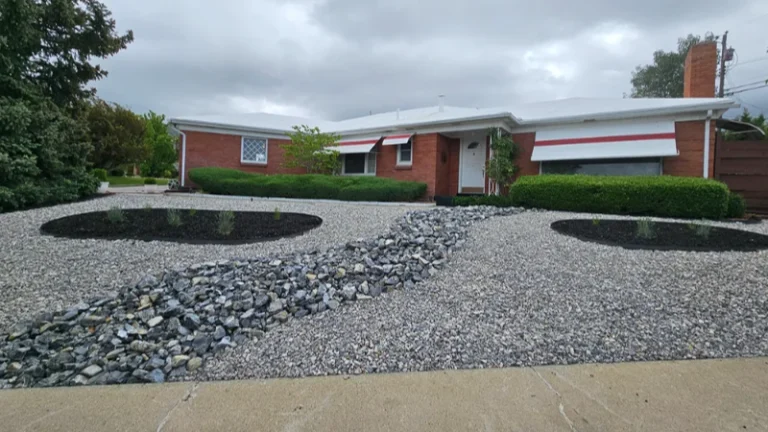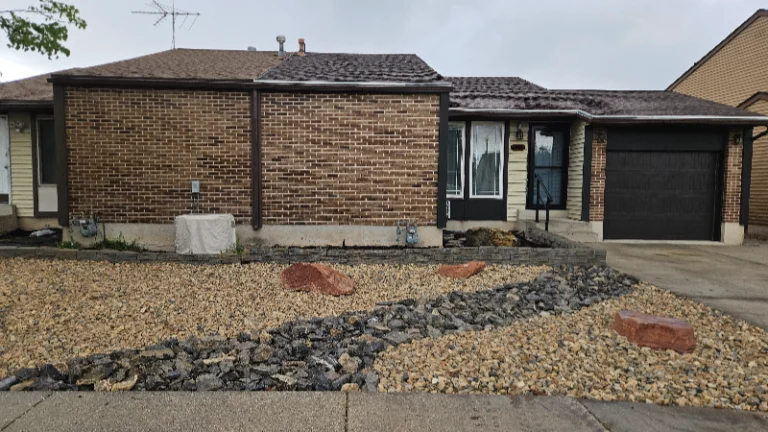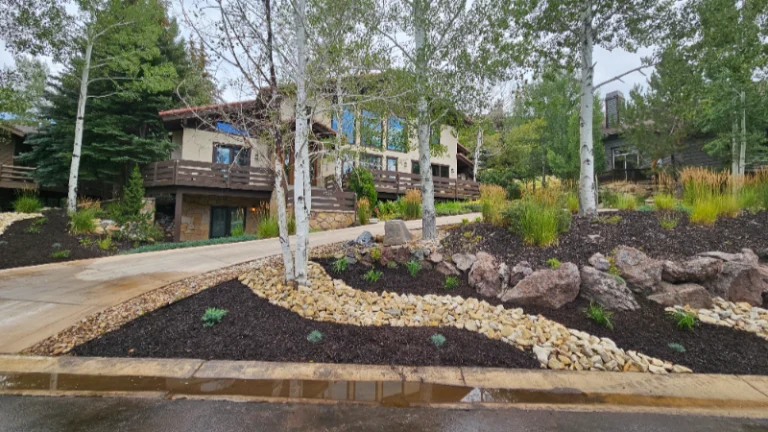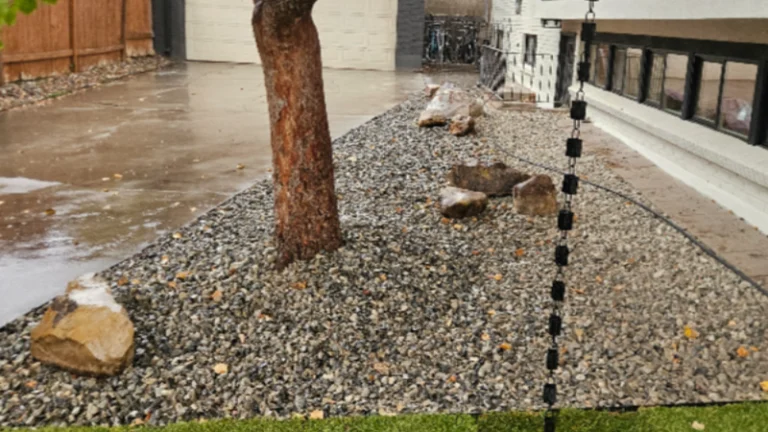
How Much Maintenance Does a Xeriscape Require in Salt Lake City?
One of the biggest selling points of xeriscaping is “low maintenance.” But let’s be clear from the start. Low maintenance does not mean no maintenance.
If someone told you that once a xeriscape is installed you will never touch it again, that is not realistic. What xeriscaping actually offers is a shift. You trade constant weekly lawn chores for predictable, seasonal upkeep. Less grinding. Fewer surprises. More control.
At SLC Lawn Services, this is one of the most common objections we address with homeowners in the Salt Lake City area. They are not looking for a yard they can ignore. They want something that looks great without taking over their schedule. Here is what maintenance really looks like with a properly designed xeriscape.
First, let’s reset expectations
A traditional lawn requires:
-
- Weekly mowing during the growing season
- Regular edging and trimming
- Fertilizing multiple times per year
- Overseeding and aeration
- Ongoing irrigation adjustments
- Weed control treatments
That is consistent, labor-intensive work from spring through fall.
A xeriscape eliminates most of that. But it replaces it with lighter, less frequent maintenance that focuses on plant health and overall appearance instead of turf survival.
Weed prevention: realistic, manageable, not zero
Weeds are the first concern most homeowners bring up. The assumption is that if you remove grass, weeds will take over.
The truth is weeds can grow anywhere. In lawns. In gravel. In cracks in concrete. The difference is how they are managed.
A professionally built xeriscape includes multiple weed-control layers:
-
- Complete turf removal before installation
- Proper soil preparation and grading
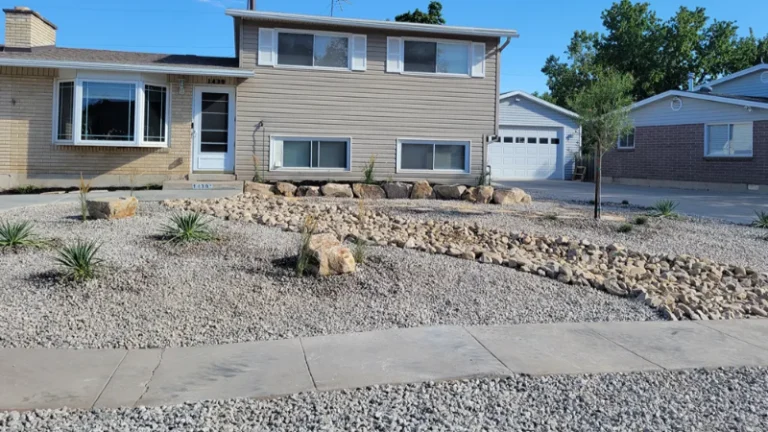
- 2–4 inches of mulch or properly installed decorative rock
- Dense plant spacing to reduce exposed soil
- Optional pre-emergent treatments when appropriate
In spring, you will likely see a small flush of surface weeds. These are usually wind-blown seeds that settle into mulch. The difference compared to a lawn is scale. Instead of treating an entire yard, you are pulling or spot-spraying a handful at a time.
Light, consistent attention every few weeks keeps things clean. Ignore any landscape for an entire season and it will look overgrown. Xeriscape is no different.
Drip irrigation maintenance
Most drought-tolerant landscapes rely on drip irrigation instead of spray heads. Drip is more efficient and far more precise, but it still needs occasional attention.
Typical drip system maintenance includes:
-
- Checking emitters in spring to confirm proper flow
- Flushing lines if debris builds up
- Cleaning or replacing filters
- Adjusting watering schedules as temperatures change
- Winterizing in fall to prevent freeze damage
For most homeowners, this is a once-or-twice-per-season task. It is not a weekly chore. Compared to constantly adjusting spray heads that overshoot sidewalks or produce dry spots, drip systems are far more stable long term.
Seasonal trimming and plant care
Plants grow. That is part of what makes xeriscaping attractive. You are building structure and texture instead of managing a flat green surface.
Seasonal plant maintenance usually includes:
-
- Cutting back ornamental grasses in late winter
- Lightly shaping shrubs once or twice per year
- Removing spent perennial growth in early spring
- Deadheading certain plants to encourage extended blooms
These are periodic tasks. Many homeowners handle them in a few focused weekends per year. Others choose to schedule seasonal maintenance visits. Either way, it is a different rhythm than weekly mowing.
What you eliminate is constant turf management. No more edging every Saturday. No more fertilizing cycles just to maintain color. No more panic watering during heat waves.
Refreshing mulch or decorative rock
Organic mulch naturally breaks down over time. That is not a flaw. It actually improves soil structure.
Most mulch needs a light top-off every one to two years to maintain proper depth and appearance. This keeps weed pressure down and helps regulate soil temperature.
Decorative rock requires less replenishment but may need occasional leveling or cleaning to keep edges crisp and defined.
Maintaining clean bed lines and proper depth is what keeps a xeriscape looking finished rather than neglected.
Drainage and long-term stability
Another overlooked benefit of xeriscaping is improved site management. During installation, grading is corrected and irrigation is redesigned. That means fewer long-term drainage issues compared to turf-heavy yards.
Periodic inspections after heavy storms or seasonal changes help ensure:
-
- Mulch has not shifted
- Rock has not migrated into sidewalks
- Drip lines remain covered and secure
These are minor adjustments, not major repairs.
The “no maintenance” myth
Here is the breakdown.
What xeriscape reduces:
-
- Weekly mowing
- High summer water use
- Frequent irrigation repairs
- Heavy fertilizer programs
- Seasonal reseeding
What xeriscape still requires:
-
- Occasional weeding
- Seasonal trimming
- Drip system checks
- Periodic mulch refresh
The benefit is predictability. Instead of reacting to lawn stress every summer, you are maintaining a landscape designed to handle Utah’s climate.
Lower effort, not zero effort
For most homeowners in Salt Lake City, Sandy, Draper, and surrounding communities, the goal is not to eliminate maintenance entirely. It is to reduce it to a manageable level.
If you are tired of constant mowing, rising water bills, irrigation breakdowns, and struggling turf, a drought-tolerant landscape offers a practical alternative.
When properly designed and installed, xeriscaping simplifies your routine while maintaining strong curb appeal.
Proudly serving the Salt Lake City area
We design and install xeriscapes throughout:
-
- Salt Lake City
- Sandy
- Draper
- South Jordan
- West Jordan
- West Valley City
- Cottonwood Heights
- Millcreek
- Herriman
- Riverton
You can review our full coverage area on our service area page.
Want lower maintenance done right?
If you are considering xeriscaping and want a realistic understanding of what upkeep looks like long term, we can walk your property and talk through plant selection, irrigation setup, and seasonal care expectations.
Contact SLC Lawn Services today to schedule your consultation. Let’s build a landscape that reduces your workload without sacrificing quality.