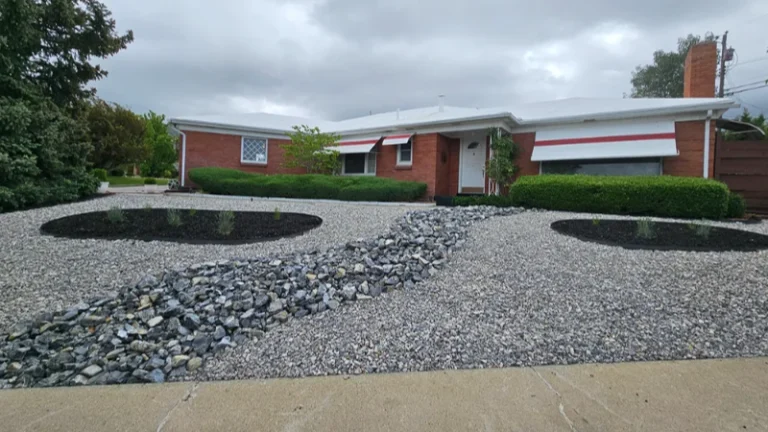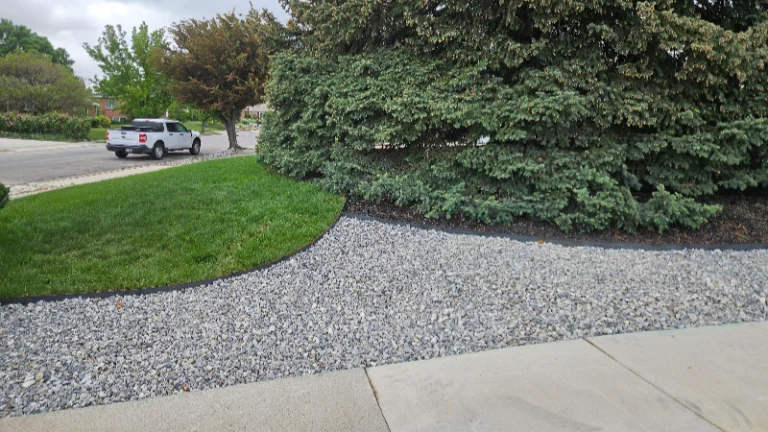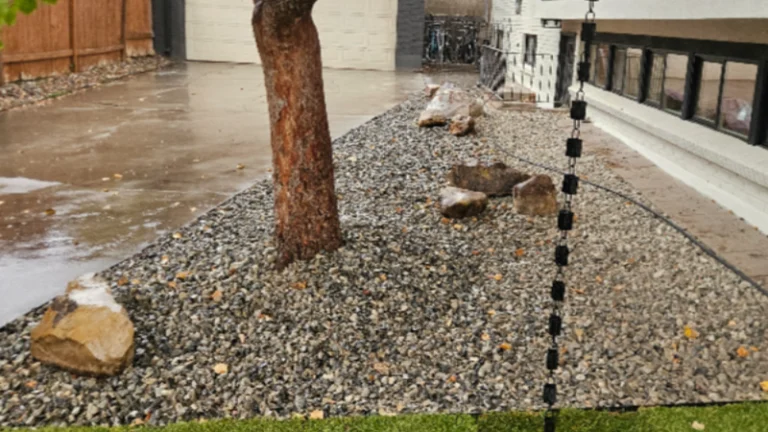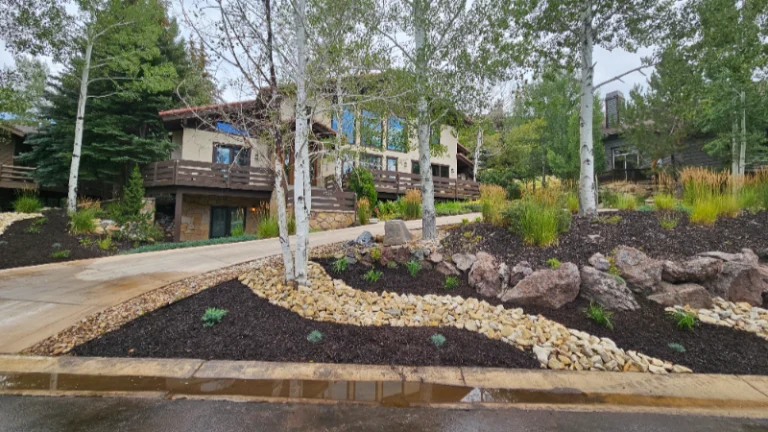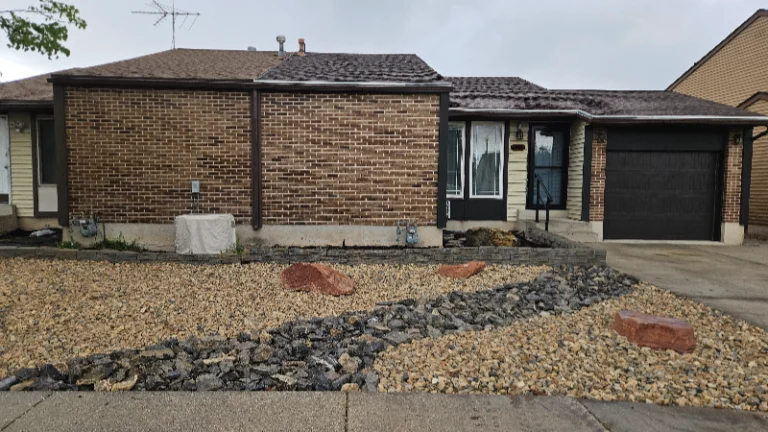
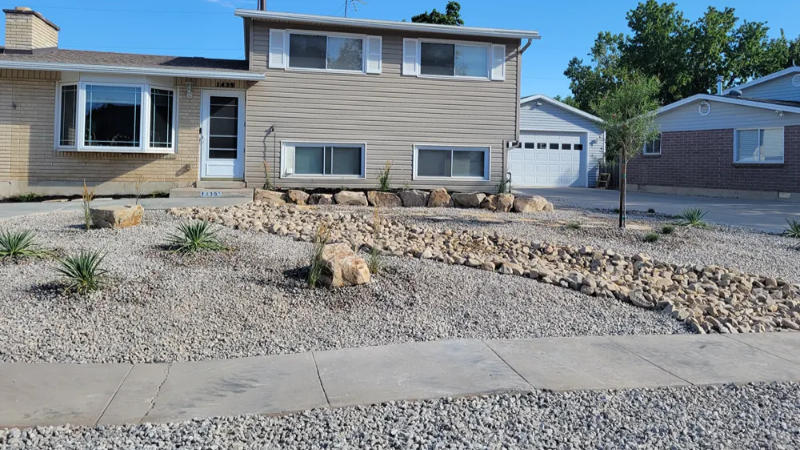
Cost to Convert Lawn to Xeriscape in Salt Lake City
If you are asking what it costs to convert a lawn to xeriscape in the Salt Lake City area, you are probably past the inspiration stage. You are not just browsing photos. You want real numbers and a clear understanding of what drives them.
Xeriscaping is not a cosmetic update. It is a landscape renovation that involves demolition, grading, irrigation work, and planting. Costs vary based on scope, but there are realistic ranges homeowners should expect in Salt Lake City and surrounding communities.
At SLC Lawn Services, we handle lawn-to-xeriscape conversions throughout Salt Lake County. Below is a breakdown of what most projects actually cost and why.
Realistic cost ranges for lawn conversion
Every property is different, but most projects fall into predictable tiers based on square footage and complexity.
-
- Small front yard or park strip conversion (500–1,200 sq ft): typically $8,000–$18,000
- Average front yard (1,200–2,500 sq ft): generally $15,000–$30,000
- Full front and backyard conversion (3,000–6,000+ sq ft): often $30,000–$75,000+
These ranges assume complete turf removal, irrigation conversion to drip, proper soil preparation, plant installation, and finished mulch or rock. If the project includes new patios, retaining walls, or structural hardscape, costs increase accordingly. For hardscape additions, review our Hardscape Pricing Guide to understand typical pricing in this market.
If you want a broader look at landscape investment levels, our Landscape Pricing Guide outlines how different features affect overall budget.
What impacts the price of xeriscaping?
Two yards with the same square footage can have very different price tags. Here are the biggest variables we see on projects across Salt Lake City, Sandy, Draper, and surrounding areas.
-
- Access to the yard – Tight side yards, fencing, or steep slopes slow down equipment and increase labor time.
- Grading corrections – If water currently runs toward the house or pools in certain areas, that must be fixed before planting.
- Soil conditions – Heavy clay or compacted fill requires additional prep work.
- Irrigation complexity – Converting multiple spray zones to properly designed drip irrigation takes time and materials.
- Plant density – A design with layered trees, shrubs, grasses, and perennials costs more than a minimal planting layout.
- Material selection – Decorative stone, premium edging, specimen trees, and custom features increase the investment.
Incentive programs such as Flip the Strip can offset part of the cost depending on location and square footage removed, but they do not eliminate the need for proper design and installation.
Why some bids come in much lower
When homeowners gather multiple estimates, it is common to see wide price swings. A lower number does not automatically mean a better deal.
Here are common reasons some bids come in significantly lower:
-
- Turf is not fully removed – Grass is sprayed and covered instead of excavated, leading to regrowth.
- No grading correction – Drainage problems are ignored rather than fixed.
- Spray irrigation is left in place – Systems are not converted to proper drip zones.
- Minimal plant material – Large areas are covered in rock with very few plants.
- No hydrozoning – All plants share one watering schedule.
These shortcuts may reduce the upfront number, but they usually create higher costs later. Struggling plants, drainage repairs, and irrigation retrofits are far more expensive after installation than doing it correctly the first time.
Long-term water savings and operating costs
While xeriscaping requires an upfront investment, long-term operating costs are typically lower than traditional turf.
-
- Reduced water consumption compared to full lawn irrigation.
- No mowing, edging, or fertilizing large turf areas.
- Lower seasonal maintenance requirements.
In Salt Lake City, outdoor water use makes up a significant portion of household consumption during the summer months. Replacing unused turf with well-designed xeriscape can substantially reduce that demand. Over time, many homeowners see noticeable savings on their water bills.
Beyond the financial aspect, there is also value in stability. During drought restrictions, water-wise landscapes are less likely to suffer or require emergency adjustments.
Is converting your lawn worth it?
For homeowners who use their turf for recreation, a reduced lawn area may make more sense than full removal. But for park strips, side yards, and front lawns that rarely get used, conversion often makes practical and financial sense.
The key is doing it intentionally. A well-designed xeriscape should look structured and finished, not like a temporary solution. It should improve curb appeal while lowering long-term water use.
Proudly serving the Salt Lake City area
We design and install xeriscapes throughout:
-
- Salt Lake City
- Sandy
- Draper
- South Jordan
- West Jordan
- West Valley City
- Cottonwood Heights
- Millcreek
- Herriman
- Riverton
You can view our full coverage area on our service area page.
Ready for a detailed estimate?
If you are serious about converting your lawn, the next step is an on-site evaluation. We will measure the area, assess grading and irrigation, discuss plant density and layout, and provide a realistic budget range.
Contact SLC Lawn Services today to schedule your xeriscape consultation. We will help you understand exactly what your project will cost and what you can expect from start to finish.